If you’ve ever stood in your living room and felt like the walls were closing in — you’re not alone. Small spaces can feel tricky, even frustrating, especially when you want them to feel warm and welcoming.
But here’s something most people don’t realize:
You don’t need a bigger room — you just need better perception.
As a design student living in Las Vegas (in a small apartment that doubles as my workspace!), I’ve spent years experimenting with what actually makes small rooms feel airy and cozy at the same time. And after hundreds of sketches, mistakes, and late-night rearrangements, I’ve learned that it’s not about money or size — it’s about visual psychology.
Let’s explore 8 visual tricks that make even the tiniest rooms feel open, calm, and deeply comforting.
1. Light Walls – The Illusion of Space

Why it matters: Bright walls reflect light and instantly open up a space.
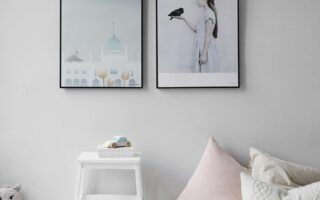
How to do it: Go for neutral shades — soft whites, creamy beiges, or pale grays.
When your walls reflect light, your eyes travel farther without hitting visual “stops.” That’s why darker walls can feel like they’re pressing in, while lighter ones pull the space outward.
Design tip: If pure white feels too cold, use a warm undertone like ivory — it adds softness without shrinking the room.
2. Use Height – Let Your Eyes Travel Up

Why it matters: Vertical lines draw attention upward, making ceilings seem higher.
How to do it: Add tall shelving, floor lamps, or art that reaches near the ceiling.
When your gaze moves up, your brain interprets “more height” — even if the room hasn’t grown an inch.
3. Low Furniture – Give the Room Space to Breathe
Why it matters: Shorter furniture creates visible air above it.
How to do it: Choose low sofas, ottomans, and tables with simple legs.
It’s like letting your room inhale — you’ll notice how much more “open” it feels when your furniture doesn’t block sightlines.
4. Hidden Storage – Clean Space, Clear Mind
Why it matters: Clutter creates chaos; chaos shrinks rooms.
How to do it: Use ottomans with compartments, beds with drawers, or baskets that slide neatly under furniture.
Every hidden storage piece is a secret ally. It makes your room look calm while quietly working hard underneath.
5. Hang Curtains High – Stretch the Walls

Why it matters: Curtains that start closer to the ceiling trick your mind into seeing taller walls.
How to do it: Mount curtain rods at least 4–6 inches above the window frame.
This one change transforms how the entire room feels — from boxed-in to beautifully elongated.
6. Add Mirrors – Double the Light, Double the Space
Why it matters: Mirrors bounce light and visually extend walls.
How to do it: Hang a mirror above a console table or behind a lamp to reflect natural light.
It’s not magic — it’s reflection. But it feels like magic when your room glows brighter and looks instantly wider.
7. Choose Soft Textiles – Warmth Lives in the Details
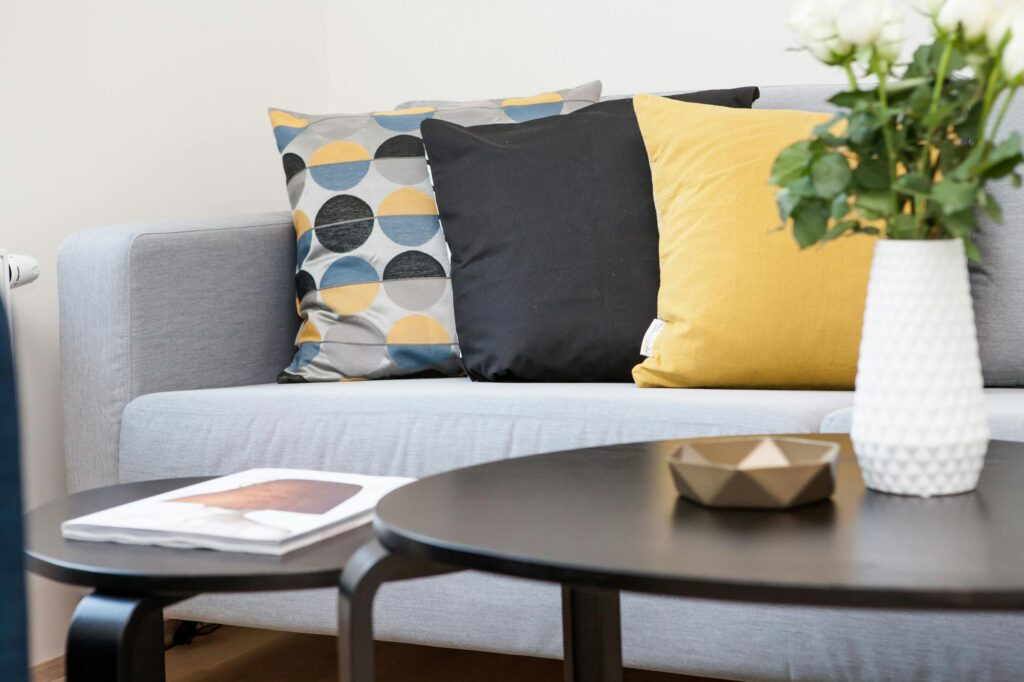
Why it matters: A cozy room is about feeling, not square footage.
How to do it: Add throws, pillows, and rugs in gentle textures like cotton, linen, or wool.
Touch matters. When your space feels soft, your body relaxes — and suddenly, even a tiny corner feels like home.
8. Avoid Loud Patterns – Keep Calm, Stay Simple
Why it matters: Busy patterns make your eyes jump around; calm colors anchor the mind.
How to do it: Stick to solids or small, subtle prints.
Your space should feel like a deep breath. When everything blends gently, you give your brain room to rest.
Final Thought
A small space isn’t a limitation — it’s an invitation.
It asks you to design with intention, to see beauty in proportion, and to make every detail count.
Every time I walk into my tiny Las Vegas apartment and see light bouncing off a mirror or a soft throw draped over a low chair, I’m reminded:
Cozy doesn’t come from size — it comes from soul.