Let’s talk about the pantry.
Or the cabinet under the bathroom sink. Or that one deep, dark shelf in the refrigerator where things go to be forgotten, only to be rediscovered months later.
We all have that space. Mine was the pantry shelf with all the “sometimes” ingredients—the bags of lentils, the extra jar of capers, the backup bottle of soy sauce. It was a jumble. I couldn’t see what was in the back, so I’d end up buying a third bottle of soy sauce, positive I was out.
And then, there’s the “Instagram pantry.” You’ve seen it: rows upon rows of pristine, clear, stackable bins. Everything is visible, everything is tidy. It looks like a small, private grocery store.
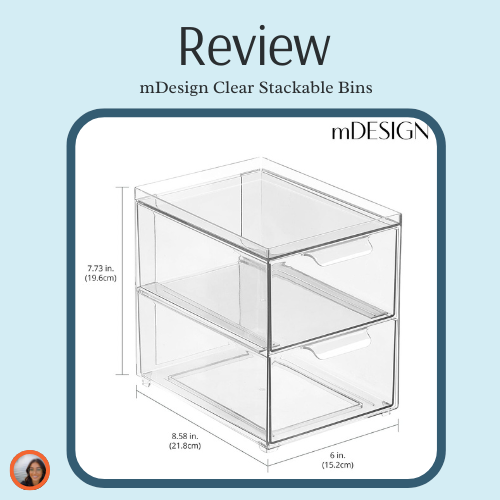
The brand at the center of this revolution is almost always mDesign, with their seemingly infinite variety of clear, stackable bins. They promise a world of order. But are they a life-changing solution, or just an expensive, brittle habit?
I went deep into the reviews—the raves, the rants, and the real-world experiences—to find out what it’s really like to live with them.
What We Genuinely Love
The joy that people get from these bins is palpable, and it boils down to two key things.
First, the most obvious one: the instant visual calm. The “before” is a chaotic mess of colorful, “loud” packaging—cereal boxes, chip bags, spice packets, all screaming for attention. The “after” is… quiet. By containing all that chaos, the bins act like a “mute” button for your shelves. You can see everything you have at a glance. It stops the over-buying. It makes finding the oregano feel simple.
Second, the stackability is a small-space miracle. This is especially true in the fridge or in deep, tall cabinets. That wasted airspace above your yogurt? You can now stack a bin of fruit cups right on top. They literally “build” new shelves where there were none, doubling your usable space. For apartment-dwellers or anyone with a tiny kitchen, this feature is a genuine game-changer.
The Real-World Frustrations (Let’s Be Honest)
Now, for the part we must talk about. The frustrations are just as real as the joys.
The number one, flashing-red-light complaint? They are expensive, and they crack.
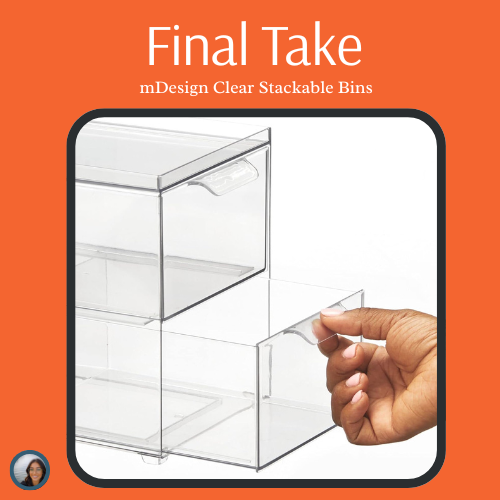
Let’s be clear: these are not soft, flexible, forgiving plastic. They are hard, rigid, and brittle. The most common story of heartbreak is someone pulling a bin full of soup cans off a high shelf, fumbling, and watching it shatter on the floor. Or having one crack in the dishwasher (note: most are not dishwasher safe). For something that costs what it does, that first crack feels like a major betrayal.
The other common struggle is “The Great Measuring Fiasco.” These bins are rigid and unforgiving. Their listed dimensions are exact. People buy them imagining a perfect fit, only to find their cabinet has a half-inch “lip” that blocks the bin. Or the fridge door shelf, when closed, bumps into the bin’s handle. You must measure your space (depth, width, and height) with precision, accounting for every hinge and lip, before you click “buy.”
The Unexpected “Aha!” Moment
Here’s the thing that popped up over and over, the real secret to why these bins work for people long-term.
It’s not just about storing things. It’s about creating “kits.”
This is the real “aha!” moment. People aren’t just filing their food; they’re grouping it by task. They create a “Smoothie Bin” in the fridge with the spinach, yogurt, and frozen fruit. A “Coffee Station Bin” in the pantry with filters, beans, and syrups. A “Kids’ Snack Bin” that they can just pull out and let the kids choose from.
Instead of grabbing ten different things, you grab one bin. You use it, and you put the one bin back. This shift from “storage” to “systems” is what truly changes the rhythm of a kitchen.
My Final Reflection: Is It Worth It?
These bins aren’t really about your pasta. They are about reducing cognitive load.
All day, our brains are making thousands of tiny decisions. When you open a chaotic pantry, your brain has to scan, identify, and filter dozens of items just to find one. It’s a tiny, “noisy” moment of friction.
A well-organized system of clear bins removes that friction. It presents you with calm, clear categories. It’s not about making your pantry look good for Instagram; it’s about making your brain feel less cluttered. It’s a small, quiet act of self-care.
The Verdict: Who Should Buy Them?
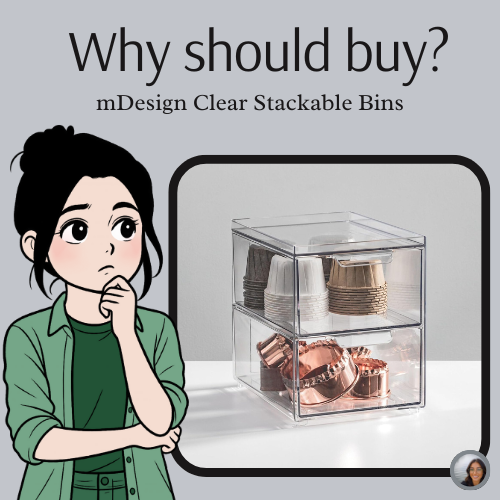
- A Resounding YES if: You are a visual person, and visual clutter genuinely stresses you out. You love the idea of creating “kits” and systems. You have a specific, contained project (the fridge, under the sink) and are willing to measure properly.
- You Might Want toSkip Them if: You are on a tight budget (there are far cheaper wire or flexible plastic baskets). You need to store heavy-duty items (like tools) or are clumsy (the “brittle” factor is real). Or if you’re a “shove and go” person—these bins require a little bit of maintenance to stay organized.
For me, the idea of turning my chaotic spaces into zones of “visual quiet” is worth the price… but I’ll definitely be handling them with care.
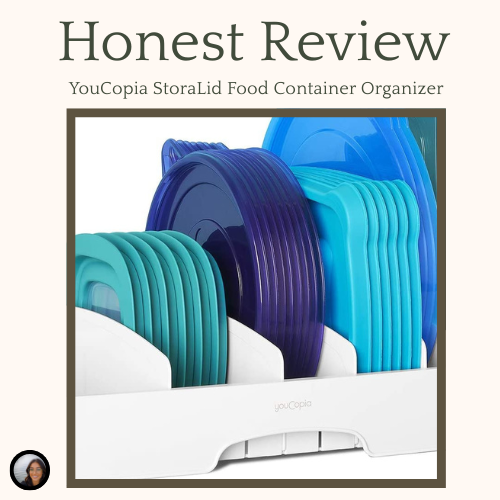
An Honest Review of the YouCopia StoraLid #1
Clack-skitter-CRASH. That’s the sound. The sound of the dreaded container lid avalanche,…
10 Things You Should Wash More Often (But Probably Don’t)
https://www.pinterest.com/pin/1107604102119872643/ Let’s be honest.We all think we’re doing a decent job keeping…
The Psychology Behind “Clutter Blindness” and How to Reset It
I had a “moment” a few months ago. It was one of…

14 Cleaning Mistakes I Used to Make (That Made My Home Feel Messier)
10 Reasons Why You Shouldn’t Use Adhesive Hooks for Your Curtains
You’re jolted awake by that specific sound—the plastic clack, followed by the…

15 Easy Tips to Create High-Impact, Low-Cost Art That Doesn’t Look Cheap
I used to do this thing… I called it the “Bare Wall…