Every October, the sweater bin on the top shelf swells until the closet door stops latching flush, and something back there always smells faintly of last year’s cedar sachet no matter how well you sealed it up in spring.
That’s the actual problem, not “storage solutions” or “organization systems” — it’s a physical bin that is too small for the number of sweaters a person owns. Vacuum bags are one of the few genuinely useful answers to it, and the search that brings most people here is some version of spacesaver large vacuum bags, because the large size sits in the useful middle: too big for a single sweater, too small to be a bedding bag.
Quick Verdict
3.7 out of 5. The Spacesaver Large bags (32″ x 24″, built to hold roughly 10-12 sweaters or a comparable stack of folded clothing) genuinely compress and genuinely hold air out — for most buyers, most of the time. The caveat that keeps this from a higher score is consistency: a meaningful minority of reviewers get a bag that won’t hold vacuum long-term, and the company’s warranty response is reportedly hit or miss depending on who you get.
Check Today’s Price on Amazon →
What They Actually Are
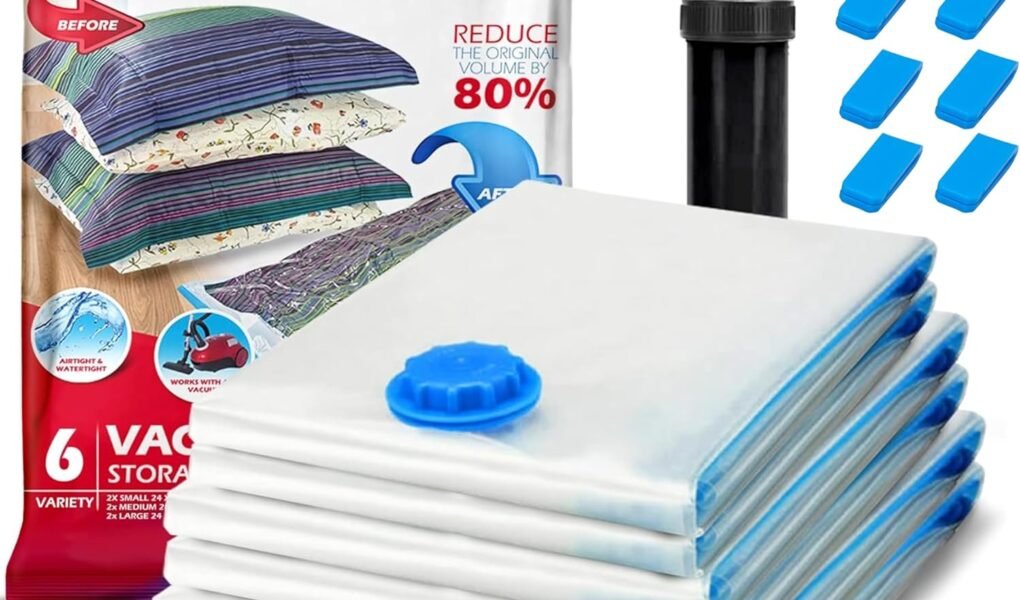
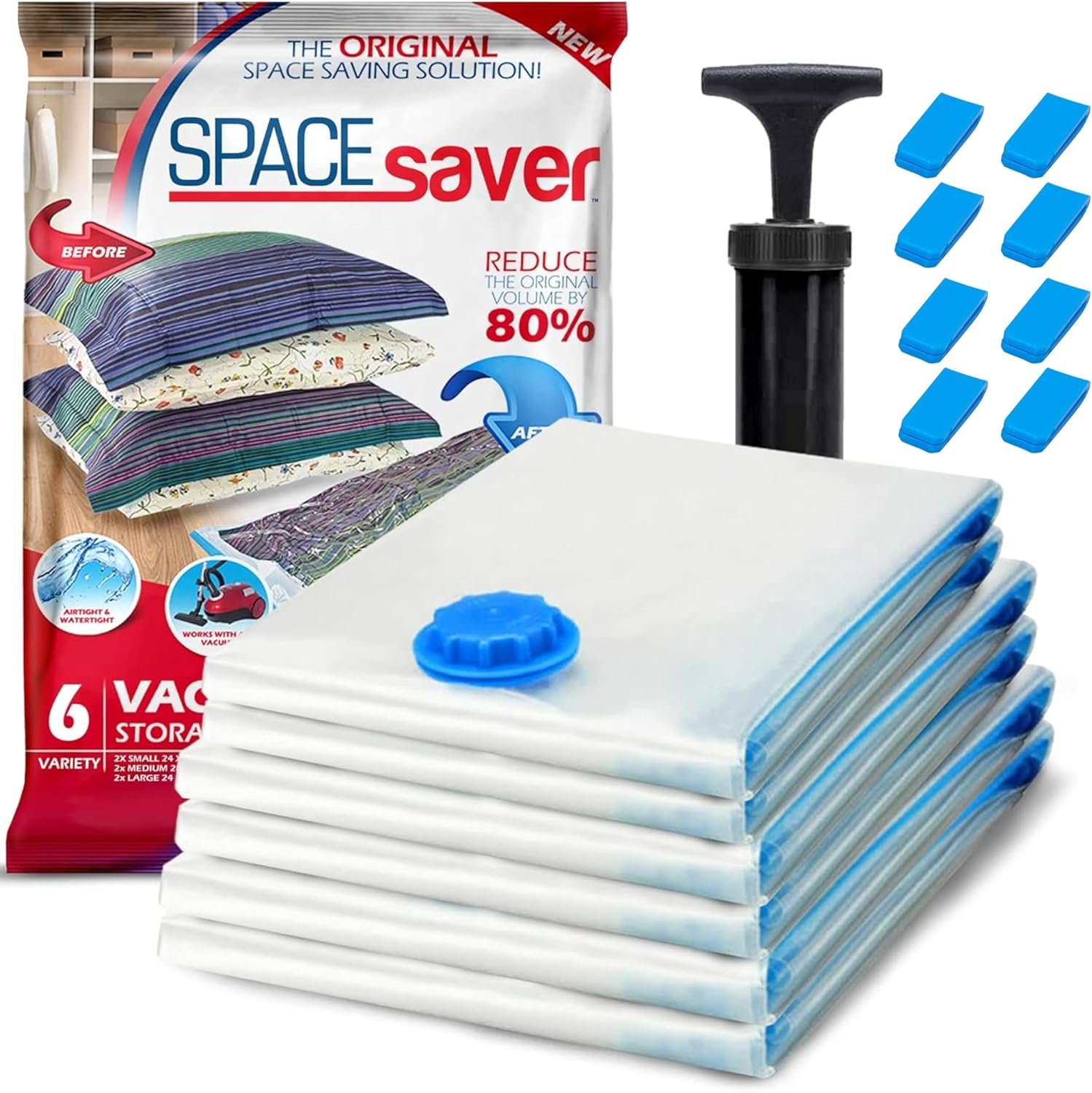
Spacesaver’s large bags are heavy-gauge plastic pouches with a double-zip closure and a one-way valve at the corner. You load clothing or bedding, run the zip closed, then either press a household vacuum hose to the valve or use the included hand pump to draw the air out. The bag collapses to roughly a third of its packed volume and stays that way until you open the valve again. That’s the whole mechanism — no motors, no batteries, nothing proprietary about the vacuum itself.
The First Few Days With the Spacesaver Large Vacuum Bags
The zip goes on easier than it looks in the product photos, though the plastic “zip helper” tab that’s supposed to guide the slider is the one part that several reviewers describe as fiddly — it tends to skip off the track if you rush it. Once sealed, a standard upright or canister vacuum pulls the air out in under a minute. The hand pump works too, it just takes considerably longer and more arm effort, which matters if you’re doing six bags in one afternoon rather than one.
The compression itself is the part that delivers. A bag stuffed with bulky sweaters goes from a duffel-bag shape to something close to a yoga mat. That first collapse is genuinely satisfying, and it’s the moment that sells most people on the whole category.
Who the Spacesaver Large Vacuum Bags Are For (and Who Should Skip Them)
This is for you if: you’re storing off-season clothing, extra bedding, or pillows in a closet, under-bed space, or attic where volume — not weight — is the constraint. It’s also a reasonable travel companion for bulky items like a winter coat you’re only wearing once on the trip. If you own a vacuum with a hose attachment, the large size hits a genuinely useful capacity for a single person’s seasonal wardrobe.
Skip it if: you’re storing anything you care about not wrinkling — down jackets and structured items can come out visibly creased after weeks under compression. It’s also not a great fit if you don’t own a vacuum with a hose attachment and are relying solely on the hand pump for a stack of bags; the effort adds up fast. And if you’ve been burned before by a bag that slowly re-inflates over a few weeks, know that reviewers report this happens often enough that it’s not a fluke — it’s usually a sign the zip wasn’t fully seated before pumping, but it happens.
Two Weeks In: What Reviewers Consistently Report
Across Amazon and third-party reviews, a pattern shows up. Most bags hold their seal for the full storage season with no issue — people report pulling out flattened bags months later, still vacuum-tight. But a smaller, recurring group reports a specific failure: the bag re-inflates slowly over days, sometimes losing most of its compression within a week even after a careful reseal. In at least one documented case, a buyer said only one bag out of five held long-term.
Wrinkling is the other theme that shows up repeatedly once bags have been packed for the full two weeks. Reviewers note that structured or down-filled items come out creased in ways that need a tumble in the dryer or a steamer to shake out — fine for a spare comforter, more annoying for a coat you want to wear the same day you unpack it.
Warranty experiences split down the middle. Spacesaver advertises a lifetime replacement guarantee, and plenty of reviewers confirm getting a free replacement bag shipped with no hassle. Others describe emailing more than once with no response and eventually giving up. There’s no clear pattern for who gets which experience, which is its own kind of frustrating.
Sitting With the Tradeoff
The Spacesaver Large Vacuum Bags do the core job: they compress a genuinely large volume of clothing or bedding into something you can actually fit under a bed, and for most buyers that seal holds for as long as it needs to. What keeps this from an easy recommendation is that “most buyers” isn’t “all buyers” — there’s a real, reviewer-documented chance you get a bag with a valve or seal that doesn’t hold, and the company’s response to that isn’t reliably fast. If you’re storing things you can live without perfectly for a season — spare bedding, off-season sweaters, guest linens — the odds are in your favor. If you’re vacuum-sealing something irreplaceable or time-sensitive, buy a couple extra bags as insurance and test the seal before you trust it for the whole winter.
Spacesaver’s official product site
More home organization reviews: Browse more Spacesaver reviews.