The comforter has been sitting on top of the closet shelf for six months, spilling over the edge every time the door opens, daring someone to just leave it on the bed year-round instead.
The real question with off-season storage isn’t whether you can technically fit the winter coats, the extra blankets, and the guest bedding somewhere. It’s whether you can fit them without stacking three overflowing bins in the one closet you’ve got. That’s the promise behind spacesaver vacuum storage bags: suck the air out, and a closet’s worth of bulk turns into a stack you can actually close a door on. What doesn’t get said out loud in the marketing is whether that flattened stack is any lighter to carry, or just smaller to look at.
The Quick Verdict
Spacesaver vacuum storage bags earn 3.9 out of 5 from me. They do exactly what a vacuum bag is supposed to do — collapsing air-filled, bulky items like comforters and puffer coats down to a fraction of their footprint — and they’re a smart buy for closet, under-bed, or garage storage. The caveat that actually matters: they compress volume, not mass. If you’re hoping they’ll shave pounds off a suitcase for a flight with a weight limit, they won’t. The item’s weight doesn’t change; only the air around it disappears.
Check Today’s Price on Amazon →
What’s Actually in the Bag
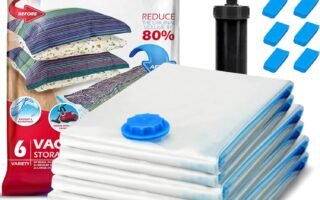
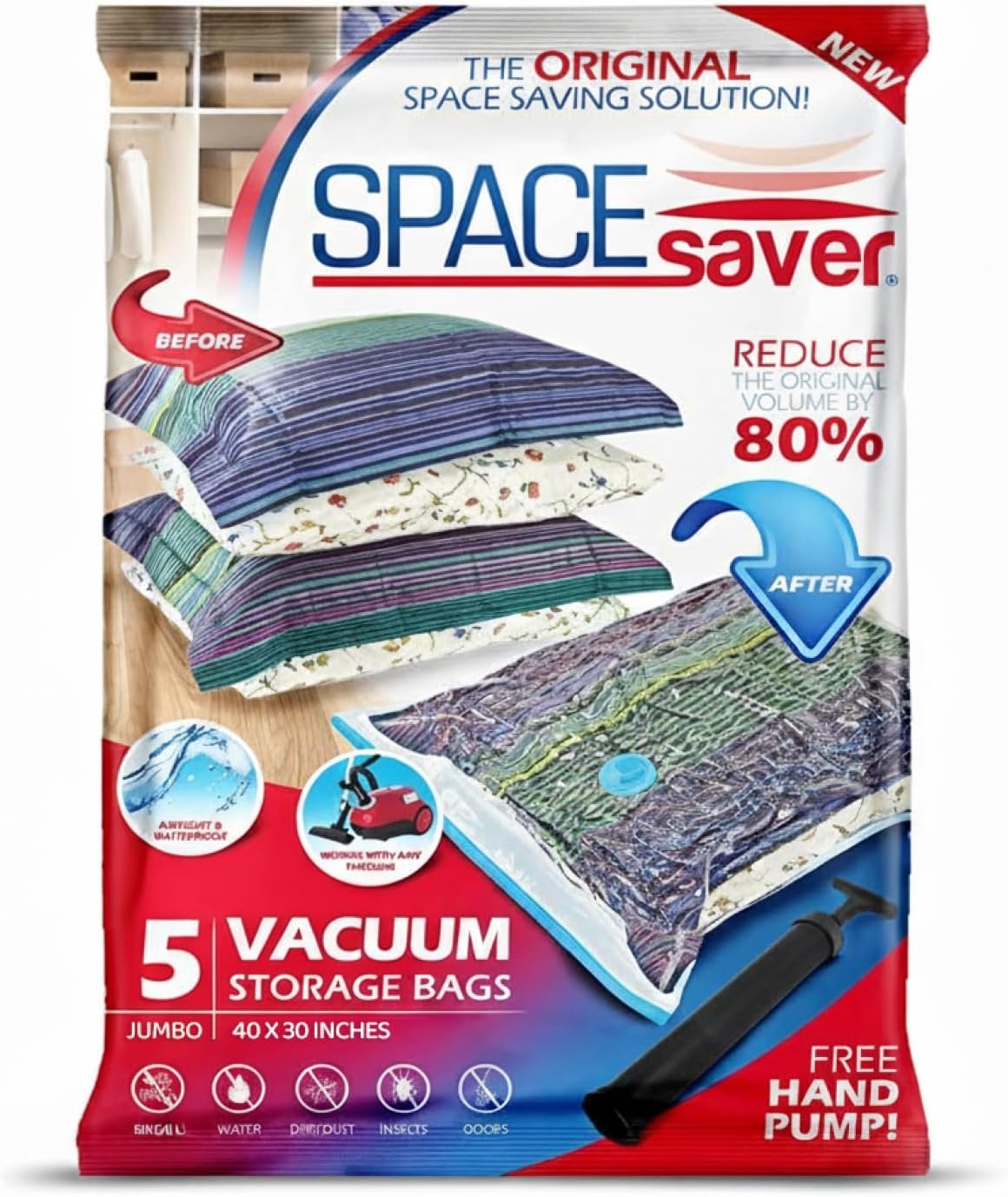
Spacesaver sells polyethylene storage bags with a double-zip seal and a one-way valve, in four sizes: Small (24×16 inches, roughly 6-8 sweaters), Medium (28×20, 8-10 sweaters), Large (32×24, 10-12 sweaters), and Jumbo (40×30, about four pillows or a full queen comforter set). A five-pack variety runs around $22. The company’s claim is 80% more storage space, and the bags work with either the hose attachment on a household vacuum or the included hand pump, which is meant for travel or anywhere an outlet isn’t handy.
The First Few Days With Spacesaver Vacuum Storage Bags
The first use is the satisfying one. Load a bag with a stack of sweaters, run the vacuum hose over the valve for thirty seconds, and watch a foot-tall pile turn into something you could slide under a car seat. One reviewer described fitting fourteen stacks of clothing from a closet into three bags total — that’s the kind of result that sells the product on its own.
The hand pump is where experiences start to split. Used correctly, it takes about three minutes of steady pumping per bag and gets you nearly the same result as a vacuum cleaner. Some reviewers found it required more effort than expected and didn’t fully seal on the first few tries. The plastic itself is thick enough that it resists puncturing during normal handling, which matters, because a pinhole in a vacuum bag defeats the entire point.
Who Spacesaver Vacuum Storage Bags Are For — And Who They Aren’t
They’re right for anyone storing seasonal soft goods long-term: winter coats between April and October, spare bedding, stuffed animals, out-of-rotation clothes in a small apartment. If your problem is a closet that won’t close, this solves it well and cheaply.
They’re the wrong tool if your actual goal is a lighter suitcase or a lighter moving box. Compressing four sweaters into a flat brick doesn’t remove a single ounce — it just concentrates that weight into less space, which several movers on forums pointed out makes a box deceptively heavy to lift even though nothing was added to it. They’re also not ideal for anything you need to grab quickly, since re-inflating and repacking a bag isn’t a thirty-second task, and they’re not the best choice for delicate fabrics that shouldn’t be compressed under pressure for months at a time.
What Changes After Two Weeks
Spacesaver bags carry an average of 4.4 out of 5 across more than 20,000 Amazon ratings, which is a solid track record. But read past the star average and a pattern shows up consistently in the lower reviews: bags that seal perfectly on day one starting to re-inflate slowly over a week, then faster after that. The usual culprit reviewers point to is a pinhole leak somewhere in the seam or valve, not visible until the bag has had time to lose pressure.
Zippers are the second recurring complaint — a handful of buyers describe the double-zip seal not aligning cleanly, which lets air back in no matter how well the vacuuming went. Spacesaver does offer a lifetime replacement guarantee, and multiple reviewers confirmed the first replacement is genuinely free. The friction shows up on the second or third claim, when some customers report being asked to cover return shipping themselves.
None of this means the bags fail outright. Most stay sealed for the length of a storage season, which is the job they’re actually being asked to do. It just means “lifetime” is doing more marketing work than the actual failure rate suggests.
Sitting With the Tradeoff
Spacesaver vacuum storage bags are good at the thing they’re honestly built for: making bulky, air-trapped items small enough to store out of sight. They are not a weight-loss trick for luggage, and they’re not maintenance-free forever — a portion of them will develop a slow leak eventually, and getting a replacement past the first one takes a little persistence. For a closet that’s been losing the battle against a pile of off-season blankets, they’re still worth the twenty-two dollars.
Spacesaver’s official product page
More home organization reviews: Browse more Spacesaver reviews.